
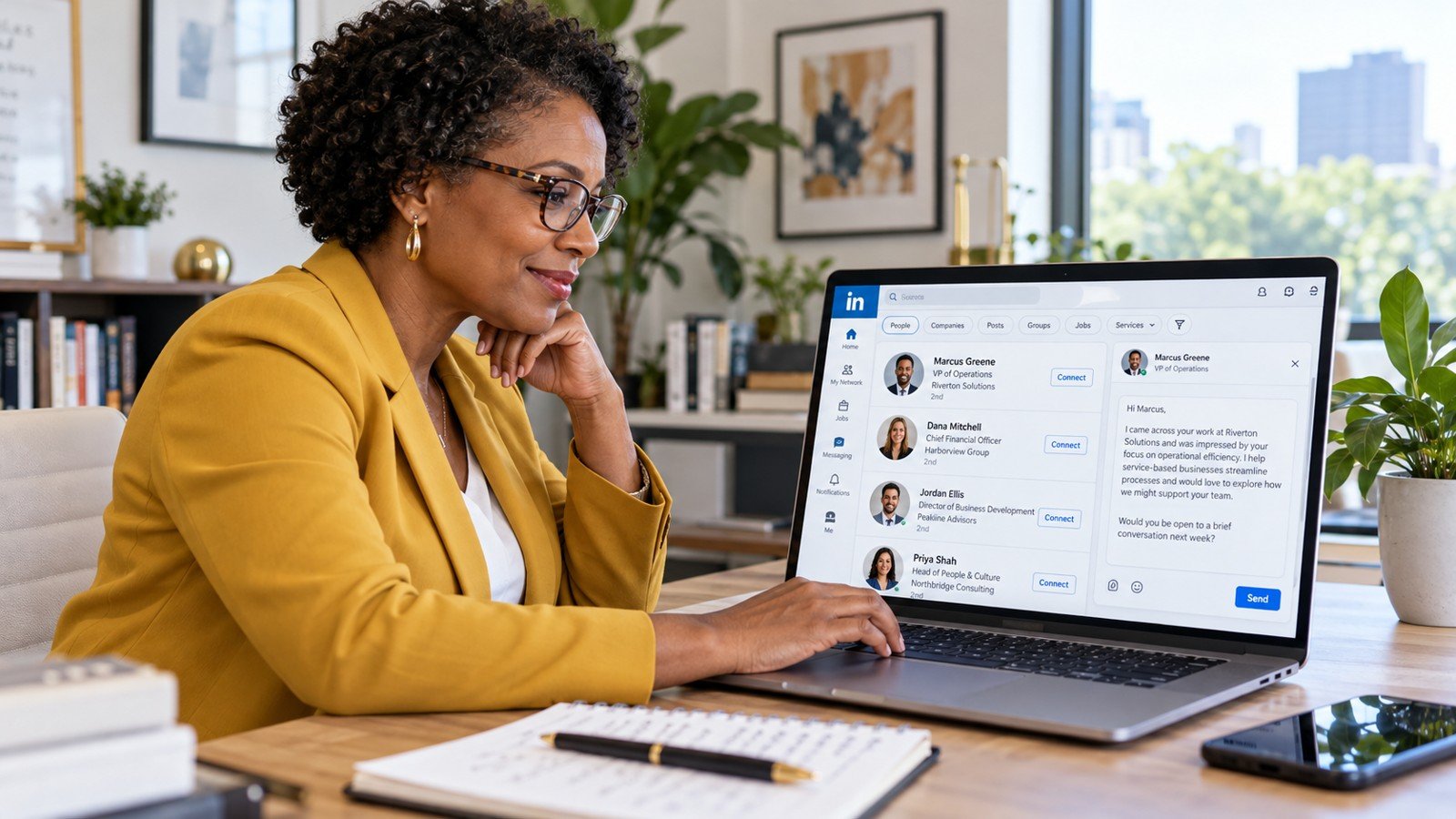
LinkedIn Lead Generation for Service-Based Businesses
Category
Quick Answer: LinkedIn lead generation for service-based businesses means finding the decision-makers who buy your service, reaching them with short personal messages, and turning replies into booked calls. It works well for consultants, agencies, accounting and legal firms, IT providers and other B2B services, because buyers hire people they trust. Attention Grabbers builds and runs this system for service businesses, from targeting to inbox management. Call 725-302-3018 to see if it fits your business.
Service businesses do not sell a product off a shelf. They sell expertise, and buyers want to know and trust the person behind it before they sign. That makes LinkedIn a natural fit, because it is where business buyers show who they are, what they do and what they care about. This guide explains how LinkedIn lead generation for service-based businesses works, which firms get the most from it, and how to run it without spamming anyone.
Why Does LinkedIn Work So Well for Service-Based Businesses?
LinkedIn works well for service businesses because it lets you reach the exact person who makes the buying decision. You can search by job title, industry, company size and location, then start a direct conversation.
That matters because services are bought on trust. A buyer choosing an accountant, a consultant or an IT partner wants to see who they would be working with. On LinkedIn, your profile, your posts and your messages all show that before the first call. By the time a prospect agrees to talk, they already have a sense of who you are.
Which Service Businesses Get the Most From LinkedIn?
Service businesses that sell to other businesses get the most from LinkedIn, especially when each new client is worth a lot over time. Good examples include:
- Consultants and advisors who sell expertise to leadership teams.
- Marketing, creative and recruiting agencies that need a steady flow of new clients.
- Accounting, legal and financial firms that serve business owners and finance leaders.
- IT, software and managed service providers that sell to operations and technology leaders.
- Coaches and trainers who work with executives and teams.
- Commercial service companies that sell to property managers, facility managers and business owners.
If you serve consumers instead of businesses, LinkedIn can still help with referral partners. It is strongest, though, when your buyer has a job title you can search for.
What Does LinkedIn Lead Generation for Service-Based Businesses Look Like?
LinkedIn lead generation for service-based businesses runs on five parts that work in order. Each part feeds the next, so a weak link anywhere slows the whole system.
- A clear profile. Your headline and About section say who you help and how, so prospects understand you at a glance.
- A targeted list. A list of the decision-makers who match your ideal client.
- Personal outreach. Short connection requests and messages written for that audience.
- Fast follow-up. Quick, helpful replies that keep conversations moving.
- Booked calls. A simple next step that turns an interested reply into a meeting.
This is the same system behind our LinkedIn management service. We build the list, write the messages, run the outreach and manage the inbox, and we let you know as soon as a lead responds.
How Do I Target the Right Decision-Makers?
Target the people who sign off on buying your service, not just anyone at the right company. Start with your best current clients and write down who hired you: their title, the size of their company, their industry and where they are based.
Use those details to build your list. A bookkeeping firm might target owners and finance directors at companies with 10 to 100 staff. An IT provider might target operations managers at firms in one region. The tighter the list, the more relevant your messages can be.
What Should My LinkedIn Messages Say?
Your messages should be short, personal and about the prospect’s problem, not your service. Mention why you are reaching out to them in particular, and ask an easy question instead of pushing for a call in the first message.
Think of the first message as a handshake, not a pitch. Our guide to what your first LinkedIn message should say covers the wording in more detail. Once someone replies, focus on understanding their situation. When the time is right, suggest a short call to see if you can help.
What Mistakes Should Service Businesses Avoid on LinkedIn?
The most common mistakes all come from treating LinkedIn like a mailing list instead of a place to build relationships. Watch out for these:
- Pitching in the connection request. A sales pitch before someone even accepts tells them you only want to sell.
- Messaging everyone. A broad list means generic messages, and generic messages get ignored.
- Talking only about yourself. Prospects care about their problems, not your awards or years in business.
- A profile that reads like a resume. Buyers want to see who you help and how, not a job history.
- No follow-up. Some good leads only reply after a follow-up.
Some of these habits also break LinkedIn’s rules. Its Professional Community Policies do not allow untargeted, irrelevant or repetitive promotional messages. They also say connection invitations should not be used to send promotions to people you do not know. Messages that break these rules can be reported to LinkedIn.
Some professions, such as legal and financial services, also have their own marketing rules. Check those before you start any outreach.
Should I Run LinkedIn Lead Generation Myself or Hire Help?
Run it yourself if you have the time to reply to messages every day. Hire help if your time is better spent on client work and sales calls.
Attention Grabbers offers both. For $500 per month, we set up the LinkedIn system and you reply to your own messages. Our done-for-you management costs $3,000 per month with a six-month minimum. We contact your ideal prospects, reply to all of your messages, and help you start LinkedIn events and launch a podcast. Either way, the system is built around the buyers your service business wants to reach.
Frequently Asked Questions
How many leads can a service business get from LinkedIn?
It depends on how many buyers fit your ideal client profile, how clear your offer is and how quickly you follow up. A tightly targeted list with personal messages usually brings better leads than a large, broad one. Focus on booked calls with the right people, not the total number of replies.
Is LinkedIn better than Google Ads for a service business?
They do different jobs. Google Ads reaches people who are already searching for a service, while LinkedIn lets you start conversations with buyers before they search. LinkedIn can reach high-value clients who may never fill out a contact form.
Do I need LinkedIn Sales Navigator to generate leads?
No, but it helps. Sales Navigator adds detailed search filters and lead lists that make targeting faster and more precise. You can start with a free or Premium account and upgrade once your outreach is running regularly.
Does LinkedIn work for local service businesses?
Yes, as long as your buyers are businesses. LinkedIn lets you filter prospects by location, so a local firm can reach owners and managers in its own city or region. Mentioning local ties in your messages often makes them more relevant.
What does Attention Grabbers do for service businesses on LinkedIn?
Attention Grabbers builds targeted lists of your ideal prospects, writes personal outreach messages, runs the outreach and manages your inbox so interested leads turn into calls. The service can also include profile optimization, content posting and reporting.
Need help now? Call 725-302-3018 or book a call with Attention Grabbers.
Key Takeaways
- LinkedIn suits service businesses because buyers hire people they trust, and LinkedIn shows who you are before the first call.
- It works best for B2B services such as consultants, agencies, professional firms, IT providers and coaches.
- A working system has five parts: a clear profile, a targeted list, personal outreach, fast follow-up and booked calls.
- Target the person who signs off on your service, and keep messages short and about their problem.
- Stay within LinkedIn’s rules by sending relevant, personal messages instead of bulk spam.
Want LinkedIn to bring in clients for your service business? Book a call with Attention Grabbers.